Here is an interesting start to this film review: back when I was younger, I think 14, maybe 15 years old, my buddy Joey and I were hanging out at the park located by Menlo Park Mall in NJ. I think we were riding bikes and just kept venturing further and further from where we were supposed to be. And in all of our exploring, we came across the Menlo Park mental institution. At least I think that is what it was called. So two kids decide to venture into this abandoned building, which was not a great idea. We ventured maybe twenty minutes wandering through, I think, two rooms, destroyed like crazy, but medical records thrown everywhere, broken medical equipment. Like crazy stuff. I was told a rumor that there was a pool in the basement, but there was no way we were going downstairs in this place. I like to think we were super brave, but we were just trying not to show how insanely scared we were to the other one. The only other memory I have is that while we are exploring, we hear a bunch of kids on the other side of the building making noise and breaking stuff, so we, with our bikes, book out of there. And that is all I remember, really. But that brings me to this film. How about a group of guys cleaning out asbestos from an abandoned mental asylum? I haven’t slept since that afternoon in 1992 anyway, what could go wrong? This film will stick with you. Let’s get to it.
Here is the setup. Gordon Fleming, played by Peter Mullan, owns a small asbestos removal/abatement company in Massachusetts, and he is in trouble. Appears to be behind on everything, new baby at home, holding the whole operation together with tape and grit. He wins a bid to remove asbestos from the Danvers State Psychiatric Hospital, a massive abandoned mental institution outside of Boston, by promising to finish the job in one week. One week. I imagine this would take a month, easily. But Gordon needs the money, and he shakes on it and brings in his crew. There is Phil, played by David Caruso, Gordon’s right-hand man, who is quietly furious about something personal. There is Hank, played by Josh Lucas, a gambling addict who has made things worse with Phil by starting to date Phil’s ex-girlfriend. There is Jeff, Gordon’s nephew, played by Brendan Sexton III, who has an inconvenient fear of the dark. Not ideal at all. And there is Mike, played by co-writer Stephen Gevedon, a law school dropout. Mike, who knows the history of the hospital and finds, in a basement library, a box of audio tapes from the psychiatric sessions of a former patient named Mary Hobbes. Mary was committed after she murdered her entire family. The tapes chronicle her sessions, the gradual appearance of multiple personalities, and the slow revelation of a third personality named Simon, whom Mike cannot stop listening to. And then things start happening to the crew. That is where the movie lives. And I am going to stop there because this is one of those films where what you do not know going in is a significant part of the experience. Good luck sleeping.
Now, the cast. And let’s just say, for the bulk of this film, it is five actors, and let’s list them out. Peter Mullan is Gordon Fleming, and this is easily his best acting work. Mullan is a Scottish actor and filmmaker who won the Best Actor prize at Cannes in 1998 for Ken Loach’s My Name Is Joe. I loved him in Trainspotting as Mother Superior, but he is also more recently Lord Durin in the LOTR Ring of Power. You will see his face and recognize him from 30-40 various films and TV shows. In this flick, he is dealing with a lot, and you are watching him go through it during this film. Just some damn excellent acting. He carries the weight of the whole film on his back and does not drop it once. David Caruso is Phil, and I want to be careful here because the easy thing to do is make the CSI Miami joke and move on. Yes, he is Horatio Caine. Yes, the sunglasses thing happened. But before all of that, he was a genuinely excellent character actor who left NYPD Blue at the height of its run to try to make it as a movie star, had a rough stretch, and in this film gave one of the best performances of his career. I know 1995 was not great for him. He was in Kiss of Death and Jade, and he was nominated for Razzies for both. I liked Kiss of Death. He is great against Nick Cage in that. Anyway, in this flick, Phil is a man operating on a very short fuse, and Caruso plays that right on the money. Josh Lucas is Hank, and you may know him from Sweet Home Alabama, The Firm, or from A Beautiful Mind, which were all coming out in the year or two after this. I also love him as Leo Beebe in Ford V Ferrari; he is great against Damon and Bale. He holds his own with great actors, and in this, he does as well. Brendan Sexton III is Jeff, and if you know Brendan Sexton III, you probably know him from Boys Don’t Cry or from Welcome to the Dollhouse, and he is one of those actors who has been working non-stop since 1995 to the present day. His fear of the dark in this film is played completely straight, and it works entirely because of him. And Stephen Gevedon as Mike is the most interesting piece of casting in the whole film because Gevedon co-wrote the screenplay with Brad Anderson, which means the character most obsessed with the tapes is played by the man who invented the tapes. That is not an accident, and it shows in every scene he has inside that basement library.
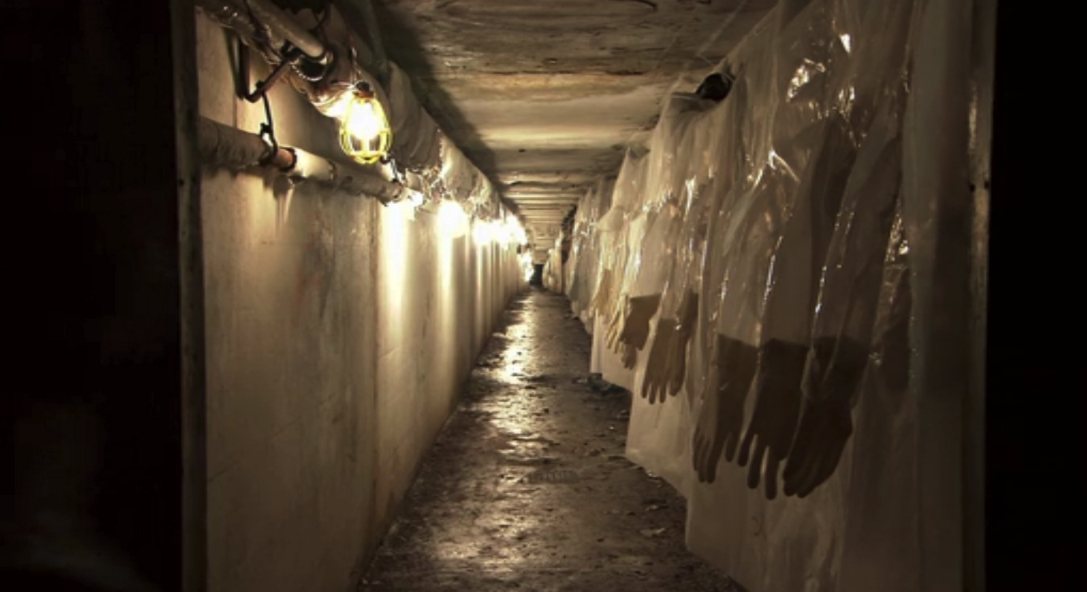
Now the crew. The director is Brad Anderson, and before we talk about this film, I want to tell you something about his career because it is a strange one to get here. His first feature was Next Stop Wonderland in 1998, a low-budget romantic comedy set in Boston. Nothing super special, but I remember it coming out. I don’t think I saw it, but I know the VHS cover. Then Happy Accidents in 2000, another romantic comedy, again nothing special, but again another VHS cover box I recall. And then Session 9. The pivot from romantic comedy to psychological horror is not the kind of jump anyone could expect, and I assume watching those first two does not lead you to believe he could make this flick, but he did. After Session 9, he made The Machinist in 2004, the Christian Bale film where Bale lost 63 pounds to play an insomniac factory worker who cannot remember the last time he slept and begins to lose it. If you have not seen The Machinist, stop what you are doing; Bale proves he is one of the greatest actors of his time. Willing to almost kill himself for a role. The next few years, I think a movie or two, but nothing that rings in my head, and then a long run of television, including Boardwalk Empire, Fringe, and The Wire. The screenplay was co-written by Anderson and Stephen Gevedon, who had the setting before they had the story. I read Anderson used to drive past Danvers on Route 93 regularly, and eventually he and Gevedon connected with a group of urban explorers they found online who took them through the building illegally one night. (nutso) Anderson said he went places he immediately regretted going, and I can say I had the same eerie sensation as well. That night in the building became the blueprint of the film. The cinematographer is Uta Briesewitz, who went on to shoot a significant portion of The Wire and also large sections of Ozark. A bunch of Ozark overlaps with the crew and actors. What she is able to do here on a budget of essentially nothing, making a real crumbling institution feel simultaneously like a documentary and a nightmare, is damn impressive. The music is composed by Climax Golden Twins, a Seattle-based experimental group, and the late 90s and early 2000s were filled with these types of groups. The score is one of the best things about the film. It is creepy and haunting, and the hair on the back of your neck standing up solid. You will dig it. The whole production was made for one and a half million dollars. To compare, Jeepers Creepers, which came out the same month, cost fifteen million. You be the judge of which one is scarier. No shade to the Creeper.
The quotes, and let’s just say some you don’t forget.
“I miss my family. How come they won’t come visit, Doctor?” – Mary Hobbs
“You know who I am.” – Mary Hobbs
“Have you seen our doll, Mister Doctor?… Mary got a china doll from her mommy, and we can’t find it now.” – Mary Hobbs
“Satanic Ritual Abuse Syndrome. It was big in the ’80s.” – Mike
“So, the loonies are out in the real world, and here we are with the keys to the loony bin, boys!” – Gordon
Let’s wrap this bad boy up, because the more I hear the Mary Hobbs voice in my head, the less sleep I am getting. This movie made essentially nothing at the box office on its limited release and then quietly became an absolute cult classic. The building where it was filmed, the actual Danvers State Hospital, was demolished in 2006. It is gone. Same as the Menlo Park one I went to. I think that is now a Target. But the Danvers State Hospital, what exists of it now, exists in this film and in the nightmares of everyone who watched it in a dark room alone. Amazon Prime the normal four dollarinos. No excuse. None. You hate it, you come find me, and I have the singles. I do not think you are coming to collect. But I do think you are going to sit in your living room after it ends and listen very carefully to every sound your house makes. That is the Session 9 experience, and I would not trade it for anything. Good luck.
Fun Facts:
- Dude, so get this. Before they could film a single scene inside Danvers, the entire cast had to go through real certified asbestos abatement training because the building was actually trying to kill them. And apparently, huge sections of it were completely off limits because they were too unsafe to even enter, which again raises the question of what exactly everyone thought they were doing in the parts they were allowed in. David Caruso said they barely had to bring any props because everything, the rotting furniture, the equipment, all of it, was just there exactly as the government left it when they bailed decades ago. Oh, and the crew signed a wall at the end of production, and Brad Anderson’s message said, and I am not making this up, “We did ASBESTOS we could.” Legendary.
- So here is something wild I found out about Danvers when I went down the rabbit hole after watching this. The place opened in 1878 for five hundred patients, eventually crammed in over two thousand, and became infamous for lobotomies and electroshock therapy before the government quietly walked away from it. But the thing that actually broke my brain is that because of its Gothic architecture and its location right near the Salem Witch Trials site, Danvers is thought to be one of the main inspirations for H.P. Lovecraft’s Arkham Sanitarium, which then became the basis for Batman’s Arkham Asylum. So there is a straight line from this real horror hospital to one of the most iconic locations in comic book history, and Brad Anderson just showed up one day and made a movie inside it, and they tore the whole thing down in 2006 and put condominiums there instead.